So What Does the Word Godspeed Mean? Breaking Down the Saying Behind the Brand
This term surfaces on jackets, hoodies, and tees, but most people have seldom taken the time to trace where it originated. Godspeed is one of those phrases that feels weighty the moment you say it out loud. It carries a sense of departure, protection, and hope all at once, which is exactly why a clothing label would want to build an identity around it. Understanding the godspeed meaning gives context to why the word resonates far beyond its old-fashioned roots. Below, we dig into the history, the current usage, and how the phrase translates into apparel that people genuinely want to wear in 2026.
Just Where the Word Godspeed Truly Got Its Start
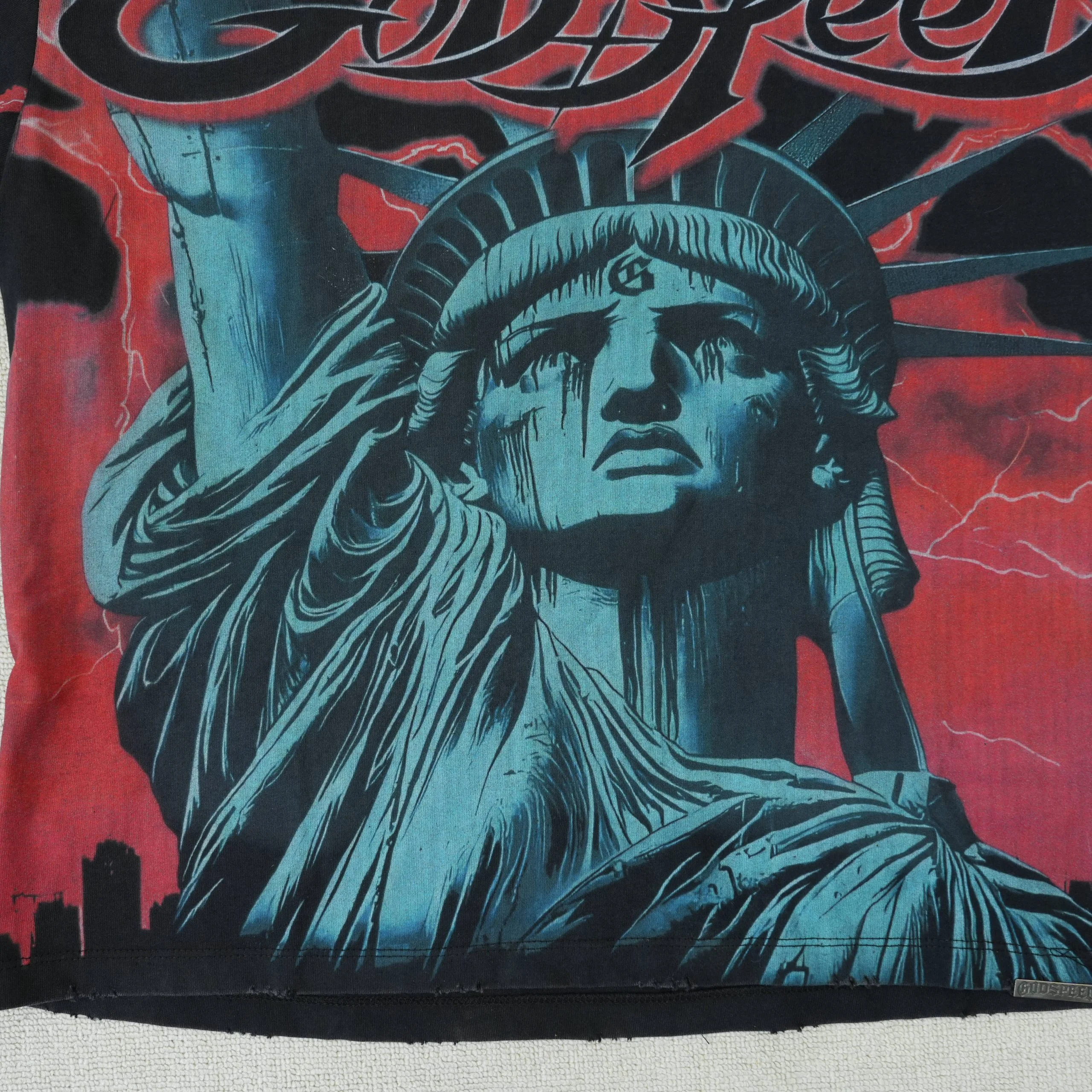
Godspeed originated in Middle English, initially spelled “God speed you,” meaning “may God grant you success” or “may God prosper your journey.” By the 14th century the phrase was in widespread use, used as a farewell to sailors, soldiers, and travelers heading into the unknown. Eventually, the three words merged into a single word, and the sense narrowed toward safety and swift progress rather than general prosperity. By the 19th century, “godspeed” was the standard way to wish someone well before a long or dangerous trip.
In the 20th century, the word picked up fresh cultural traction through its use in aviation and space exploration. NASA flight controller Gordon Cooper’s callsign moment during Mercury missions, and later the famous phrase spoken to John Glenn — “Godspeed, John Glenn” — cemented the word in American public memory. No longer just an old-timey farewell — it turned into shorthand for courage before a launch, a mission, or any make-or-break moment. That layered history is part of why the term godspeed hoodie feels bigger than a simple goodbye.
Defining Godspeed in the Modern Era
Put simply, what does godspeed amount to today, apart from the history? In modern use, it serves as an expression of encouragement blended with a nod toward fate or divine favor. People say it before exams, competitions, moves, breakups, or any transition that feels like a leap into the unknown. For most speakers now, it’s less about religion and more about recognizing that effort alone doesn’t guarantee outcomes — every now and then you require the wind at your back too.
That duality between grit and grace is precisely why streetwear and apparel brands have leaned into the word. A godspeed shirt isn’t selling a religious message; it’s selling momentum. It stands as a wearable reminder that the wearer is pressing on no matter obstacles. That kind of symbolism travels well across skate culture, hip-hop influenced fashion, and everyday streetwear, which explains the word’s staying power on hangtags and graphic prints heading into 2026.
Godspeed as a Brand Identity: Why It Works for Clothing
When a clothing brand’s name does more than simply label a product, it succeeds, because it should signal a mindset. Godspeed as a brand name draws on the ideas of resilience, journey, and self-belief without requiring a lengthy explanation on every tag. Shoppers grasp the emotional cue instantly, even if they’ve never studied the word’s Middle English origins. Such quick recognition is an asset in a market where focus is fleeting and shelf space, digital or physical, is hard-won.
On top of that, there’s a visual upside. The word “godspeed” has a bold, balanced appearance in bold type, which lets it render sharply across chest logos, sleeve text, and back-panel graphics. Creatives developing god speed clothing ranges often match the lettering with dynamic graphics: feathers, velocity marks, or highways vanishing into the distance. These stylistic picks strengthen the “keep moving” message the word already carries, creating a unified aesthetic thread across hoodies, outerwear, and tees.
The Way the Concept Shapes Product Design
Teams designing around such a charged word have to be cautious not to water down it with excessive context. Most successful godspeed shirts keep the type treatment understated, letting the word carry its own weight rather than surrounding it with taglines. Palette decisions tend to favor bold contrasts — dark-on-light, light-on-dark, or muted natural hues — because the phrase itself already carries weight; the design doesn’t need to shout to be impactful.
Textile and fit decisions matter just as much as graphics. A godspeed hoodie aimed at regular rotation needs a fit that works layered under a jacket in cooler months and alone in transitional weather. Fabric weight, hood shape, and ribbed cuffs all influence how the garment holds up, not just how it appears. Companies that treat the word as a design philosophy — not just a stamp — tend to produce pieces that people reach for repeatedly, which is the actual proof of whether a concept becomes lasting product.
How Godspeed Shows Up Across Product Types
The word doesn’t sit still on one type of garment. It shows up across jackets, printed tees, accessories, and knits, each category interpreting the meaning with small variation based on use-case and who’s wearing it. A heavyweight hoodie might use the word to imply toughness in harsh weather, while a lightweight tee might use it to imply ease and forward motion. Below is a comparison of how the concept generally varies across common product types in a god speed clothing lineup.
| Garment Type | Common Application | Aesthetic Focus | Seasonal Positioning |
|---|---|---|---|
| Godspeed Hoodie | Everyday comfort meant for combining with other pieces and cold-weather comfort | A shaped hood construction matched by a striking graphic placement | A essential item for Fall/Winter |
| Godspeed Shirt (Tee) | An foundational piece for everyday casual wear | Minimal design on the chest or sleeve | An essential item for Spring/Summer |
| Godspeed Outerwear | Coverage during transitional and colder conditions | Accents through embroidery and patches | Late Fall/Winter |
| Godspeed Accessories | A final detail that doubles as a brand identity piece | Compact branding, low-key placement | All-season |
This lineup carries weight because it proves the word isn’t restricted to one aesthetic. Whether the wearer prefers a thick hoodie for chilly mornings in winter, or alternatively a plain t-shirt for a summer trip, the underlying message of momentum and encouragement doesn’t waver. Thanks to this adaptability, the phrase has remained meaningful as a brand pillar rather than a short-lived fad.
Godspeed Apparel’s Common Customer Base
The audience for this kind of clothing skews toward people who see fashion as a form of quiet motivation. Athletes wear it before competitions as a reminder to trust their training. Travelers wear it as a nod to the journeys they’re about to take, literal or otherwise. Students and young professionals wear it during periods of transition — graduations, new jobs, relocations — because the word validates the uncertainty they’re stepping into.
There’s also significant common ground with streetwear enthusiasts who gravitate toward brand names with layered meaning. Rather than an arbitrary word chosen for looks, godspeed bears generations of linguistic history, a quality that resonates with shoppers who seek their wardrobe selections to mean something beyond the surface. This marks a real point of difference in a market flooded with generic slogans, and it’s part of why the word sustains solid performance on both hoodies and tees season after season.
What Godspeed Means in Today’s Everyday Language
Outside the fashion sphere, the phrase still gets used in talk and text, though in a more casual way than a hundred years back. Folks type “godspeed” in SMS messages before a friend’s interview for a job or slip it into a group chat before someone’s departure. The word is brief, the phrase is kindly, and it doesn’t require additional explanation, which makes it well-suited within rapid-fire digital messaging. Rather than fading into archaic territory like some relics of Middle English, the word has held up well largely thanks to that efficiency.
Across music, film titles, and band names alike, that word keeps turning up, further cementing its tie to forward motion and parting. Each additional appearance adds a subtle layer to the collective understanding of the word, something that favors any brand shaped around it. Even if they can’t quite place where they picked up the word before, a shopper encountering a godspeed shirt in 2026 still brings years of accumulated familiarity to the moment they first see it—it’s not a blank-slate encounter.
A Last Look at the Word That Shapes the Label
Godspeed has lasted through roughly seven centuries of shifts in language, evolving from a farewell for medieval travelers to a battle cry embraced by astronauts to a graphic emblazoned on contemporary streetwear. That kind of longevity isn’t accidental — it boils down to a plain, widely-felt idea — hoping someone fares well as they venture into the unfamiliar. Stitched across a godspeed hoodie or printed clean on a tee, the word still does what it’s always done: sending people forward with a bit more nerve than they had just before.